
Wagashi Crafting and Sake Experience

at KONTACTO EAST STUDIO in Nishiazabu, Tokyo
With the cherry blossom season approaching, our sake experience organized a creative twist by offering hands-on crafting of Japanese sweets. Guests were intrigued by the combination of sweets and sake, and seemed to enjoy their handmade creations even more.


Wagashi is a term for Japanese-style confections in general. Wa(和)means Japan and Kashi(菓子)means Sweets in Japanese. They are traditionally served with matcha green tea during the tea ceremony.
To begin with, the beauty of Japanese confectionery lies in the appreciation of Japan's four seasons and traditions. Sakura mochi (cherry blossom cake) in spring and Kuri Yokan (sweet bean jelly made with chestnuts) in autumn are known as classic examples.


These days, more people avoid animal products and prefer ethical and plant-based diets, Japanese confectionery is attracting attention, including from overseas. The primary ingredients for many are vegan-friendly, such as anko (red bean paste), agar, and rice, which have been cultivated in Japan for centuries.
At this event, attendees were able to experience the final decoration part of making two types of Wagashi, following the instructor's guidance. A lineup of Kubota sake was served later for the toast to honor the achievement.


Tasting sake and Wagashi together was apparently a first experience for most participants, with one guest from Finland commenting, “I have tried sake with Western food before and thought it matched well, but had not tried it with sweets. I was pleasantly surprised how well it matched with the sweets as well.”
This fresh perspective was a discovery even for a frequent sake drinker from the U.S., commenting, "I've never paired sake with dessert before. This experience changed my thinking."


A guest from Ukraine, who usually drinks gin, white wine, and whiskey, had such a wonderful remark, “I didn’t know much about sake and this opened my mind up more about the possibilities. I think the sake is included in my list of favorite alcohol.”
It was truly encouraging for us to see everyone exploring the versatility of sake as another American guest commented: “I found a new type of sake that I like! Also, the Wagashi-making activity was quite fun.”


Other enjoyable feedbacks received included these: “I love Wagashi and getting to make it myself is always very special! And of course, I love sake. ” “I’m grateful to have had this great culinary and cultural experience. I learned a lot and had fun. The instructor was great as well. ” “A very fun and interactive class! I like that we got to make Wagashi and were introduced to Japanese culture.” “Good experience to meet other people who like sake.”


Here is the full story.
What is “Nerikiri Wagashi” ?


We introduce the Nerikiri Wagashi, unbaked premium confections among the diverse styles.
Nerikiri Wagashi is an artistic Japanese confections made from a dough of Nerikiri, which is a mixture of white bean paste and glutinous rice flour (Mochiko or Shiratamako). The interesting thing about Nerikiri is that it can be molded into whatever shape you want, just like clay.
The most commonly used tool for making Nerikiri Wagashi is the triangular bar (Sankaku Bo in Japanese). It is used to draw various lines on the dough. Three edges in different shapes can make sharp, soft, and double lines. It may look like a simple tool, but it is capable of creating the delicate beauty of Nerikiri.

1.Sakura Nerikiri with Sakura Paste Filling

The cherry blossom petals are depicted delicately by various lines drawn with the triangle bar. The white bean paste tinted faintly pink on the outside is sweet, while the white bean paste mixed with salted cherry blossom inside is sweet and salty. The combination with KUBOTA SPARKLING was the most popular among the guests today. A guest from Taiwan, having a penchant for red wine, favored the matching and said, “It tastes good. Not too strong, not too sweet.” A regular beer drinker from the U.K. felt “refreshing and balanced the sweetness.” A sake lover from France appraised as “well balanced with a bit of salty touch.” Meanwhile, another beer enthusiast from the U.K. rated it with KUBOTA SENJYU GINJO best and noted, “They complemented each other well.”

2.Sakura Leaf with Red Bean Paste Filling
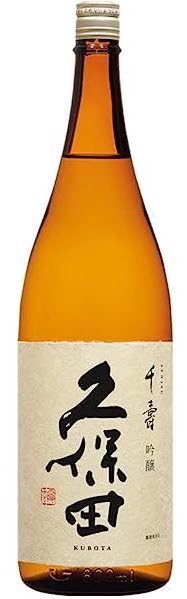
The second one is another Nerikiri Wagashi brimming with creativity. The white bean paste mixed with matcha green tea powder is made to look like a cherry blossom leaf and wraps the red bean paste filling. A green tea flavor gives the bittersweet character. While a wine lover from the U.S. felt that KUBOTA SENJYU GINJO “enhanced the matcha flavor,” a rum lover from Colombia rated the pairing with KUBOTA SENJYU NAMAGENSHU best and commented, “The sake paired well with the Wagashi. It even changed the taste at some point.” A guest from the U.S. drinking Soju often liked “the spiced taste with the red bean flavor.” A wine and sake drinker from the Philippines fancied KUBOTA JUNMAI GINJO NIGORI itself as well as the pairing with the Wagashi and complimented as a “Perfect match.”
Two seasonal limited edition sakes were also offered as pairing options.
Paired with
KUBOTA JUNMAI GINJO NIGORI
*seasonal limited
*only available in Japan
Asahi shuzo online shop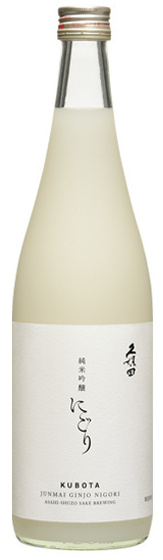
Paired with
KUBOTA JUNMAI GINJO NIGORI
*seasonal limited
*only available in Japan
Asahi shuzo online shop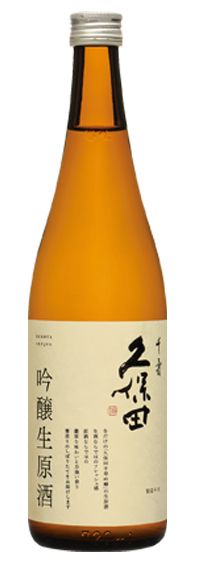
Her love for culinary arts began at age 9 when she baked a St. Patrick's Day cake for her school in Anchorage, Alaska using a Betty Crocker Cake Mix. By age 12, she was cooking full-course dinners for her family. After 7 years in the United States, she returned to Japan.
As a Sales and Marketing Manager for a global electronics company, she traveled to nearly 40 countries, visiting Japanese restaurants abroad, which sparked her passion for teaching authentic Japanese cuisine to foreigners. After moving to the UK with her husband, she taught Japanese cooking to her neighbors, inspiring her to teach Japanese home cooking upon her return to Japan.
Since 2014, she has been teaching Japanese home cooking to foreign residents and tourists in Tokyo. In 2020, she began online classes, allowing global participation from their kitchens. Due to the rising demand for online classes on Japanese sweets, she renamed her school to Simply Oishii Wagashi School in January 2021.
She established the Wagashi Promotion Association Japan to promote Japanese sweets to the world by training English speaking instructors.
Held at her private kitchen studio in Tokyo, conveniently located within a short walking distance from Meguro Station.

Miyuki Suyari
Founder / Instructor of
Simply Oishii Wagashi School
Representative Director of
Wagashi Promotion Association
@simply_oishii @wpa_japan
Youtube
Simply Oishii Channel
www.simplyoishii.com
www.wpa-japan.com

Simply Oishii’s Wagashi crafting classes are held occasionally at KONTACTO EAST STUDIO and reservations are required.
KONTACTO EAST STUDIO
2-25-11 Nishiazabu, Minato-ku, Tokyo
www.kontacto.jp
Instagram @kontactoeast


 EN
EN